Amid broadening Israeli aggression, where is Gaza heading?
TEHRAN – Israel’s ongoing aggression and expansion of its occupation in Gaza leave Palestinian resistance forces with difficult choices ranging from enduring attrition, a limited breakthrough, to returning to full-scale confrontation.
It is no longer possible to describe the assassinations, bombardment, destruction, and expansion of Israeli-controlled areas in the Gaza Strip as violations of the so-called U.S.-brokered “ceasefire agreement” signed nearly ten months ago.
The scale of the regime’s daily, systematic military operations, which kill and injure dozens of Palestinian civilians, goes far beyond isolated breaches and is approaching the level of a broad military aggression.
This means, beyond any doubt, that the Israeli Occupation Forces (IOF), acting under clear orders from the political leadership headed by war criminal Benjamin Netanyahu, have effectively abandoned Gaza’s fragile ceasefire.
Since it was announced on October 10 of last year, the agreement has produced neither meaningful progress nor any genuine breakthrough.
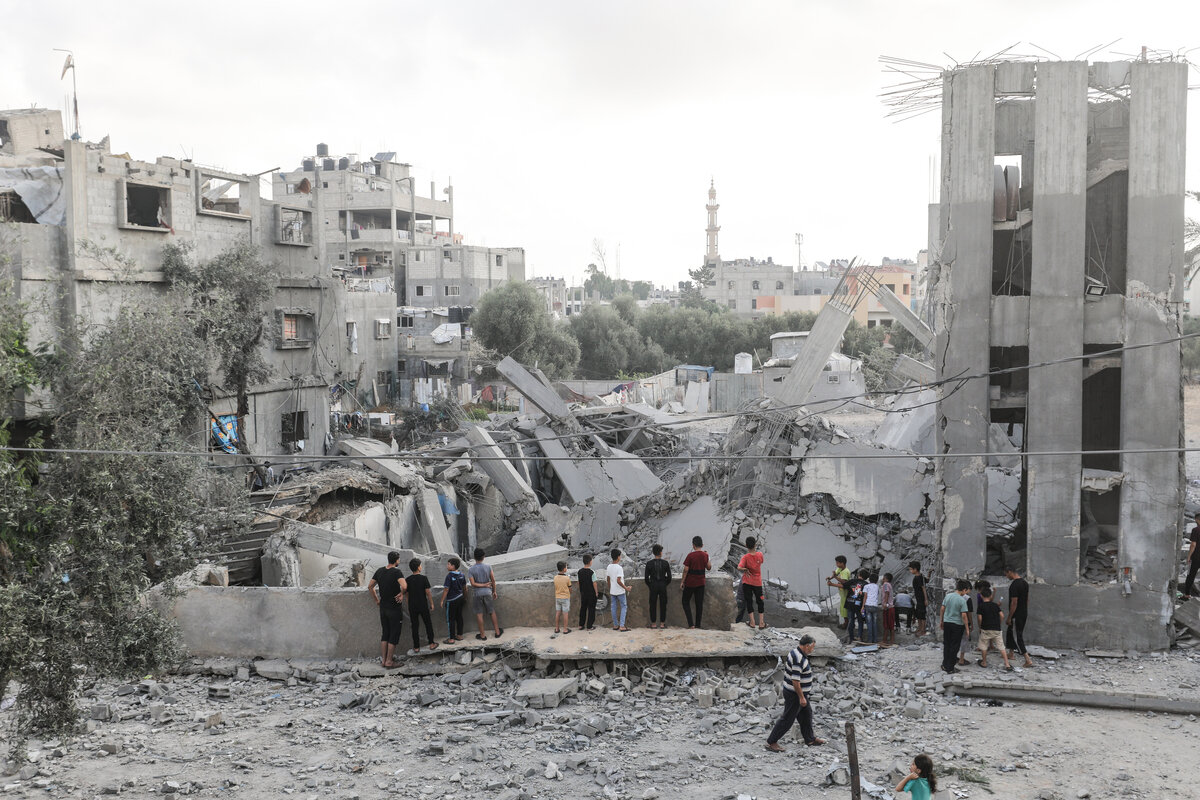
Instead, economic conditions for the Strip’s residents have continued to deteriorate amid the near-total suspension of emergency humanitarian aid, the continued closure of border crossings, and the prevention of any reconstruction efforts or even the removal of millions of tons of rubble and debris.
The regime’s determination to collapse the ceasefire and return to the path of genocidal war can be seen in many of the developments unfolding across the besieged and devastated enclave.
Foremost among them is the sharp increase in assassinations targeting Palestinian resistance members. These attacks have grown both in frequency and sophistication, reaching unprecedented levels over the past two months in particular.
Dozens of members have been killed alongside their families, neighbors, and passersby, with no regard for the laws of war established under international conventions.
The assassination campaign in Gaza has expanded far beyond targeting senior commanders or high-ranking officials among Palestinian resistance forces. It now extends to anyone with even the most distant connection or family relationship to resistance members.
In Gaza, this is viewed as an extremely dangerous development, warning of an unprecedented expansion in Israeli aggression during the coming period, especially with fewer than one hundred days remaining before the regime’s parliamentary elections, which have historically coincided with a higher Palestinian death toll.
Expanding the ‘Yellow Line’ and shrinking the strip
Another notable development is the IOF’s expansion of the area under its control beyond the so-called “Yellow Line.” Although this has been taking place since the “ceasefire” began, it has reached particularly alarming levels over the past two weeks, especially around Gaza City, where the line continues to expand toward Salah al-Din Street.
The expansion also includes Deir al-Balah and the camps of the central governorate, where the “Yellow Line” is being enlarged for the first time to encompass vast areas. At the same time, preparations are underway to completely separate certain geographic areas from the rest of the Strip, as has already occurred in Rafah.
Along Rafah’s northern boundary, which separates it from neighboring Khan Younis, the IOF has installed iron gates closely resembling those that divide towns and villages across the occupied West Bank, signaling its intention to reduce the Gaza Strip to the smallest possible territory.
If current conditions persist, that territory could eventually shrink to less than 20 percent of its original area, fragmented by barriers and checkpoints into isolated cantons cut off from one another.
Other developments include reducing the operations of international and humanitarian organizations to an absolute minimum, further worsening the suffering of Gaza’s residents, alongside the renewed destruction of residential blocks and the forced evacuation of civilians from what remains of their homes, and even from their worn-out tents.
All of this has cast a dark shadow over the lives of Gaza’s residents, who had hoped for at least a minimal level of safety and stability.
It also means that the ”agreement” they had counted on to achieve those goals has failed. It has deepened their suffering to an unprecedented degree while simultaneously sparing the regime from a broad wave of international criticism and pressure, which, despite its largely symbolic nature, had represented a significant source of pressure before the ceasefire agreement was reached.
Slim chances of the ‘agreement’ holding
In light of these developments, the chances of the “ceasefire agreement” surviving appear extremely slim, particularly given the striking inability of the mediators and guarantors to compel the occupying regime to halt or even reduce its escalation, or even to hold it responsible for the potentially catastrophic consequences that could plunge the entire region into the unknown.
This is especially true as the entire region stands on a knife’s edge amid the U.S.-Israeli aggression against Iran, which could eventually expand to engulf the region as a whole.
Three possible scenarios appear likely in the near future, each carrying significant consequences for all parties concerned with the “agreement”. The Palestinian people in Gaza, however, will undoubtedly bear the greatest impact, whether for better or for worse.
Scenario one: The status quo continues
The first scenario is that conditions remain unchanged, driven by the Palestinian resistance factions’ determination not to give the regime the opportunity to completely destroy the “agreement” and return to the genocidal war sought by Netanyahu and the rest of his far-right fascist coalition.
Under such circumstances, the Palestinian resistance would have to absorb heavy losses within its ranks, including a considerable number of fighters and cadres, while dozens of civilians continue to be killed alongside them.
This also raises the risk of partially losing its popular support base. Although much of the public still stands behind the Palestinian resistance and supports its choices, many have grown weary of the prolonged wait and have largely lost hope that the current situation can offer any escape from the relentless succession of crises surrounding them.
Although this scenario still appears to be the Palestinian resistance’s preferred option, at least for now, it leaves it cornered in an extremely difficult position and imposes costs far greater than it likely anticipated when it agreed to the ceasefire.
Scenario two: A limited breakthrough
A second possibility, which the Palestinian resistance appears to be counting on, is a reduction in the pace of the IOF’s aggression and the emergence of a limited, even if only partial, breakthrough regarding the blockade, the reopening of border crossings, and the start of debris removal and reconstruction efforts, even if only in small, limited areas.
There appear to have been promises from the mediators and guarantors, particularly following the recent Cairo meetings, during which the Palestinian resistance demonstrated considerable flexibility and presented detailed proposals addressing the issue of “disarmament”.
This issue has become the principal obstacle preventing movement toward the second phase of the “agreement”, a transition the regime has sought to block by every possible means.
Some believe that the deployment of units of an international stabilization force to parts of the Strip could help create such a breakthrough and make it possible for the Gaza Administrative Committee to begin carrying out its assigned responsibilities.
The realities on the ground, however, suggest no imminent progress, especially given the occupation regime’s unmistakable intransigence, which has gone so far as to announce plans for the construction of illegal settlements in the northern Gaza Strip, effectively reviving the situation that existed before the 2005 withdrawal from Gaza.
Scenario three: Collapse of the ‘ceasefire’
A third scenario, which some consider more likely than the previous two, is the complete collapse of the “ceasefire” and a return to the conditions that prevailed before the agreement.
While neither Gaza’s residents nor the Palestinian resistance desire such an outcome, it may become an unavoidable necessity, particularly if the IOF intensifies its aggression even further.
Many consider this increasingly likely because of the regime’s approaching elections, where opinion polls indicate that the current prime minister and his far-right coalition may lose the parliamentary majority needed to form the next government, a nightmare that Netanyahu and his allies appear determined to avoid at any cost.
Should the aggression continue to intensify, the Palestinian resistance may have little choice but to activate all of the options still available to it.
Although those options are limited and carry severe and painful consequences, some believe they would still be preferable to allowing the current situation to continue indefinitely.
In any case, conditions in the Gaza Strip may appear more catastrophic and tragic than ever before. Its residents, who are enduring immense hardship, may seem to have almost no options left, while the choices available to the Palestinian resistance may appear reckless and exceptionally dangerous.
Yet there are times when people and national liberation movements find themselves compelled to go to the furthest and most perilous lengths in order to salvage what can still be saved and to move beyond stagnation toward genuine and lasting solutions.
Leave a Comment